Blogs
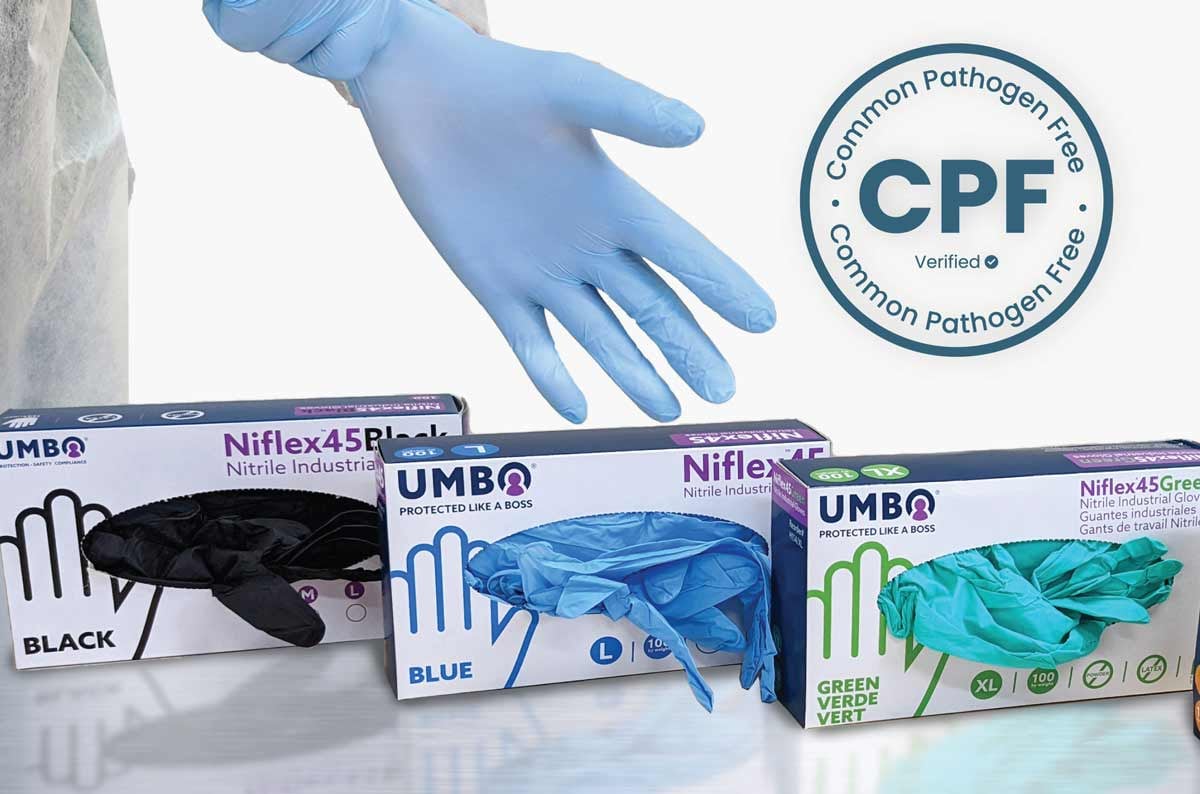
UMBO released a line of certified pathogen-free nitrile gloves for enhanced contamination control in high-risk industries. Learn the benefits of rigorous testing and operational advantages.
In the food industry, where contamination control is paramount, the integrity of personal protective equipment represents a critical yet often overlooked vulnerability. Traditional nitrile gloves, while providing basic barrier protection, frequently lack verification of microbial safety at the point of manufacture and packaging.
The UMBO Niflex® certified pathogen-free nitrile gloves address this significant gap through rigorous third-party laboratory testing protocols. Each production batch undergoes independent verification to ensure the complete absence of harmful bacteria, including Staphylococcus aureus, Escherichia coli, Listeria monocytogenes, and Salmonella species. This whitepaper examines the contamination risks inherent in standard glove manufacturing, the validation methodology behind certified pathogen-free products, and the operational benefits for high-risk industries.
The Hidden Contamination Risk
Current Industry Standards and Gaps
The global disposable glove market has experienced exponential growth, yet regulatory frameworks governing microbial contamination remain inconsistent across manufacturing regions. While gloves must meet basic physical property standards, comprehensive pathogen testing is not universally mandated.
Manufacturing facilities in various regions operate under diverse hygiene protocols, with significant variation in environmental controls, worker hygiene standards, and post-production handling procedures. These inconsistencies create potential pathways for microbial contamination during production, packaging, and distribution phases.
Industries at Risk
Several sectors face elevated exposure to contamination risks from inadequately tested protective gloves:
Food Processing and Manufacturing: Cross-contamination during food handling represents a primary vector for foodborne illness outbreaks. Contaminated gloves can introduce pathogens directly onto food products, particularly in ready-to-eat food production, where no subsequent kill step exists. The economic impact extends beyond immediate health concerns to product recalls, facility shutdowns, brand reputation damage, and potential litigation.
Clinical and Research Laboratories: Scientific research depends on sample integrity. Microbial contamination from gloves can compromise experimental results, invalidate research findings, and necessitate costly study repetition. In diagnostic laboratories, false positives from contaminated gloves can lead to misdiagnosis and inappropriate treatment protocols.
Pharmaceutical Manufacturing: Aseptic processing environments maintain stringent bioburden limits. Introduction of even minimal microbial contamination can compromise entire production batches, resulting in significant financial losses and potential regulatory action.
Clean Room Operations: Electronics manufacturing, medical device production, and biotechnology applications require controlled environments with defined particle and microbial counts. Contaminated gloves introduce variables that can exceed environmental specifications and compromise product quality.
The UMBO Niflex® Solution
Third-Party Verification Protocol
Amerisan's UMBO Niflex® gloves distinguish themselves through independent laboratory certification rather than manufacturer self-testing. This verification approach provides objective validation of pathogen-free status for each production batch.
The testing protocol specifically targets the four bacterial species most commonly associated with contamination concerns in sensitive environments:
- Staphylococcus aureus: A ubiquitous pathogen frequently carried by humans, capable of causing food poisoning and opportunistic infections
- Escherichia coli: Indicator organism for fecal contamination, with pathogenic strains causing severe foodborne illness
- Listeria monocytogenes: Environmental contaminant of particular concern in food processing due to growth capability at refrigeration temperatures
- Salmonella species: Leading cause of bacterial foodborne illness with significant public health impact
Manufacturing Quality Control
Beyond end-product testing, the UMBO Niflex® production process incorporates enhanced environmental controls and hygiene protocols throughout the manufacturing chain. These preventative measures reduce contamination risk before gloves enter final verification testing.
Batch traceability systems enable complete supply chain transparency, allowing end users to access certification documentation specific to their glove inventory. This documentation provides audit trail evidence for regulatory compliance and internal quality management systems.
Product Performance Characteristics
Certified pathogen-free status does not compromise the fundamental performance attributes required of professional-grade nitrile gloves. UMBO Niflex® gloves maintain:
- Superior tactile sensitivity enabling precise manual tasks
- Chemical resistance appropriate for diverse applications
- Physical durability, minimizing premature failure
- Comfortable fit reduces hand fatigue during extended wear
- Latex-free composition eliminates Type I allergy concerns
Operational Benefits and Value Proposition
Risk Mitigation
Implementation of certified pathogen-free gloves provides quantifiable risk reduction. The independent verification eliminates gloves as a contamination vector, enabling organizations to focus contamination control efforts on other potential sources. This targeted approach enhances overall facility hygiene programs and strengthens food safety plans, laboratory quality systems, and clean room protocols.
For food processors operating under Hazard Analysis and Critical Control Points (HACCP) systems, certified pathogen-free gloves provide documented evidence of preventive controls. This documentation strengthens regulatory compliance posture and demonstrates due diligence in contamination prevention.
Regulatory Compliance and Audit Readiness
Third-party certification documentation facilitates regulatory inspections and customer audits. Rather than relying on manufacturer claims alone, operations can present objective laboratory verification of pathogen-free status. This aligns with increasing regulatory emphasis on verified supplier controls and risk-based preventive systems.
By eliminating gloves as a contamination source, certified pathogen-free products reduce the frequency and severity of contamination events.
Brand Protection and Market Trust
In an era of social media amplification and heightened consumer awareness, contamination incidents can rapidly escalate into brand crises. The reputational damage from a single outbreak may require years to repair and can permanently alter competitive positioning.
The proactive adoption of certified pathogen-free gloves demonstrates the organization's commitment to safety and quality. This commitment builds trust that extends beyond immediate contamination prevention to encompass overall quality culture.
Application Environments
Food Production and Processing
All food handling operations benefit from certified pathogen-free gloves, with particular value in high-risk categories including fresh produce processing, ready-to-eat food manufacturing, dairy operations, meat and poultry processing, and seafood handling. The direct hand contact inherent in these operations makes glove integrity a critical control point.
Laboratory and Research Facilities
Microbiology laboratories, pharmaceutical research and development, diagnostic testing facilities, biotechnology operations, and academic research institutions all require confidence that gloves themselves do not introduce experimental variables or compromise sample integrity.
Pharmaceutical Manufacturing
Aseptic processing areas, compounding operations, quality control laboratories, and packaging operations within pharmaceutical facilities demand the highest levels of contamination control. Certified pathogen-free gloves align with the industry's stringent bioburden requirements.
Clean Room Operations
Electronics manufacturing, medical device production, aerospace component fabrication, and semiconductor processing all maintain controlled environments where introducing microbial contamination violates fundamental process requirements.
Implementation Considerations
Product Selection and Sizing
UMBO Niflex® gloves are available in multiple size ranges to ensure proper fit across diverse user populations. Proper sizing optimization balances comfort, dexterity, and protection while minimizing premature failure from excessive stretching or reduced sensitivity from excess material.
Integration with Existing Programs
Certified pathogen-free gloves complement rather than replace comprehensive contamination control programs. They function as an enhanced component within broader hygiene protocols, environmental monitoring systems, and employee training initiatives.
Cost-Benefit Analysis
While certified pathogen-free gloves represent a premium category, the incremental cost proves minimal when evaluated against the potential consequences of contamination events. A single avoided recall or laboratory sample set repetition typically exceeds the annual cost differential across an entire facility's glove usage.
Documentation and Traceability
Organizations should establish systems for retaining batch-specific certification documentation corresponding to glove inventory. This documentation provides crucial evidence during investigations and audits while supporting traceability requirements in regulated industries.
Conclusion
The adoption of certified pathogen-free nitrile gloves represents a logical evolution in contamination control strategy. As industries face increasing regulatory scrutiny, more sophisticated customer audit requirements, and heightened public awareness of contamination risks, the need for verified rather than assumed microbial safety becomes paramount.
UMBO Niflex® gloves provide this verification through independent laboratory testing, offering objective evidence of pathogen-free status while maintaining the performance characteristics required for demanding applications. The resulting risk reduction, regulatory compliance enhancement, and operational stability justify adoption across sensitive environments where contamination control is critical.
Organizations committed to excellence in safety, quality, and operational resilience should evaluate certified pathogen-free gloves as a strategic enhancement to their contamination prevention programs.
For detailed product specifications, certification documentation, or to discuss your specific application requirements, don't hesitate to get in touch with our sales team:
Our specialists can provide application guidance, regulatory documentation support, and customized implementation assistance to ensure optimal integration of certified pathogen-free gloves into your operations.
Website: www.amerisan.com
Phone: (888) 586-7990
Email: clientcare@amerisan.com