SQF Edition 10 introduces auditable food safety culture requirements. Learn what auditors will look for, what your facility needs to document, and how Amerisan helps food manufacturers prepare before January 2027.
If you've been treating food safety culture as a soft concept — SQF Edition 10 is about to change that. Released on March 1, 2026, Edition 10 makes culture a defined, measurable, and auditable component of the SQF system. With Edition 10 audits expected to begin as early as January 2, 2027, that gives facilities roughly nine months to close the gap between where their culture stands today and where it needs to be.
What Is a Food Safety Culture Assessment Plan?
A Food Safety Culture Assessment Plan is a documented, systematic evaluation of whether the shared values, behaviors, and attitudes across your facility actively support food safety and what you're doing to improve them over time.
This is not a one-time survey or a checkbox exercise. It's an ongoing process with defined objectives, measurable outcomes, and assigned corrective actions when gaps are identified. Auditors will expect to see a living plan, evidence of it in practice, and proof that findings actually drove change.
What's New in SQF Edition 10
The updated Code requires facilities to maintain a documented Food Safety Culture Assessment Plan as a formal requirement — not an informal expectation. This means food safety culture must be assessed, documented, and continuously improved.
Edition 10 also introduces weighted Core Clauses, meaning non-conformances in high-priority areas carry greater scoring penalties than in Edition 9. A minor non-conformance against a Core Clause is now worth two points instead of one; a major is worth seven instead of five.
Other key changes include:
- A revised, risk-based approach to environmental monitoring programs
- Stronger expectations around change management
- A digital-first Code format with a new Code Selector tool to help sites identify the correct requirements for their scope
- All training requirements consolidated into a single clause, with added emphasis on training effectiveness — not just completion
Why This Matters
History has shown that many serious food safety incidents occurred at facilities that passed their audits. Procedures were documented. Training records were complete. But on the floor, a different culture was operating. Employees hesitated to report issues, shortcuts were normalized under production pressure, and line stoppages were discouraged.
Edition 10 classifies these patterns as what they truly are: hidden hazards. Effective food safety management cannot rely solely on written procedures. It requires engaged leadership, consistent behavior across every shift, and a proactive culture that surfaces problems before they become incidents.
What Auditors Will Look for in Your Food Safety Culture
Beyond paperwork, expect auditors to assess:
- Whether employees feel comfortable speaking up about concerns , at every level, including temporary and seasonal workers
- How supervisors handle food safety issues during high-pressure production runs — not just when things are calm
- Whether corrective actions address cultural gaps, not just procedural ones
- How well are temporary and seasonal staff integrated into your food safety expectations
- Evidence that culture assessment findings led to documented action with verified outcomes, not just logged observations
Auditors will review documentation, interview staff at multiple levels, and observe behavior in real time. They're looking for signs that food safety is practiced consistently, not just when someone is watching.
How to Prepare for an SQF Edition 10 Food Safety Culture Audit
The time between now and January 2, 2027, is a preparation window. Here's where to start:
- Conduct a gap assessment against Edition 10 requirements to identify where your current programs fall short
- Document your Food Safety Culture Assessment Plan with defined objectives, evaluation frequency, and a process for turning findings into assigned, verified actions
- Run at least one culture assessment cycle — surveys, interviews, and floor observations — so you have findings and follow-through to show an auditor
- Strengthen management review meetings to reflect real trend analysis and decision-making, not just routine reporting
- Integrate temporary workers into your food safety culture from day one of onboarding
How Amerisan Can Help
A strong food safety culture requires more than training — it requires an environment where doing the right thing is easy. That's where the right tools matter.
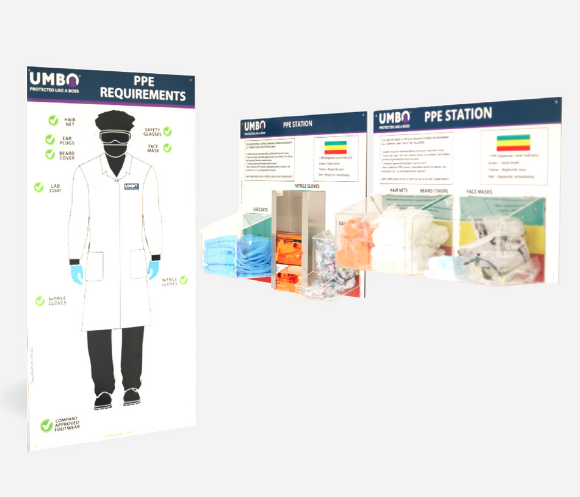
Color-coded cleaning systems, clearly labeled shadow boards, and properly stocked PPE stations all create visual cues that reinforce correct behavior at every shift, for every employee. When your facility is organized, and your tools are intuitive, compliance becomes part of the culture, not a constant correction.
Frequently Asked Questions
When do SQF Edition 10 audits begin? SQF Edition 10 was released on March 1, 2026. Audits against the Edition 10 requirements are expected to begin on January 2, 2027, subject to completion of the GFSI benchmarking process. Audits scheduled before that date will still be conducted under Edition 9.
What is required in a Food Safety Culture Assessment Plan under SQF Edition 10? Your plan must include defined culture objectives, a method for evaluating culture (such as surveys, interviews, and behavioral observations), a frequency for assessments, and a documented process for assigning and verifying corrective actions based on findings.
How is food safety culture measured under SQF Edition 10? Auditors evaluate culture through a combination of documentation review, employee interviews at all levels (including temporary workers), and direct observation of behaviors on the floor. The goal is to determine whether food safety is practiced consistently — not just when an auditor is present.
Does SQF Edition 10 apply to temporary workers? Yes. Auditors will specifically assess how well temporary and seasonal staff are integrated into your food safety expectations and culture — making onboarding and ongoing communication critical components of your plan.
If you're preparing for an SQF Edition 10 audit or looking to strengthen your food safety culture from the ground up, Amerisan's team is here to help.
Contact us to schedule a plant assessment and see where your facility stands before the January 2027 deadline.